
Modern facility retail, managed like it matters.
Operation Vend Pro designs, installs, stocks, monitors, and improves vending programs ranging from upgraded traditional machines and cashless vending to smart coolers, micro markets, and other unattended retail formats—built around the facility, its foot traffic, and the people it actually serves.
A focused assessment. No aggressive sales process. Every opportunity is reviewed for fit before equipment is recommended.
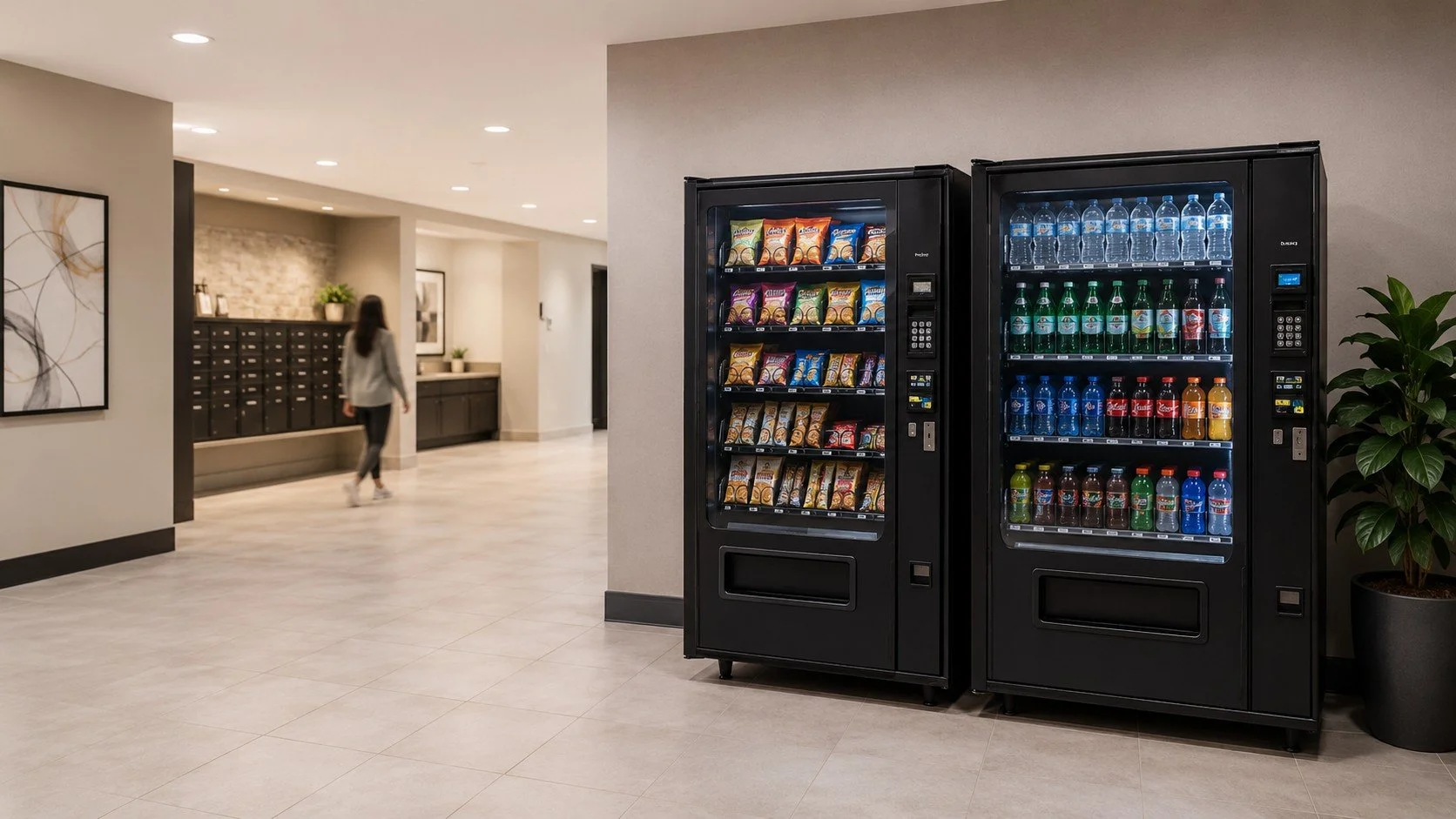
Employees associate it with their workplace. Residents associate it with property management. Parents associate it with the club. Guests associate it with the venue.
Operation Vend Pro does not treat that responsibility as a route stop. We treat each qualified location as a small retail system that must earn its space through usefulness, reliability, and continued care.
Fit
The need, format, placement, products, and economics must make sense together.
Care
Cleanliness, availability, payment, service, and communication must remain dependable.
Evidence
Actual customer behavior should guide stocking, product, and expansion decisions.
Evolution
The program should improve as the facility, population, and demonstrated needs change.
Most vending problems are not machine problems.
Old equipment is visible. The deeper failures are often operational.
Poor placement. Generic products. Cashless systems that do not work reliably. Stockouts that remain visible for days. No clear issue response. No feedback loop. No reasoned relationship between the facility and the assortment.
Replacing the cabinet without replacing the operating mindset only creates a newer version of the same disappointment.
Evaluate an underperforming program →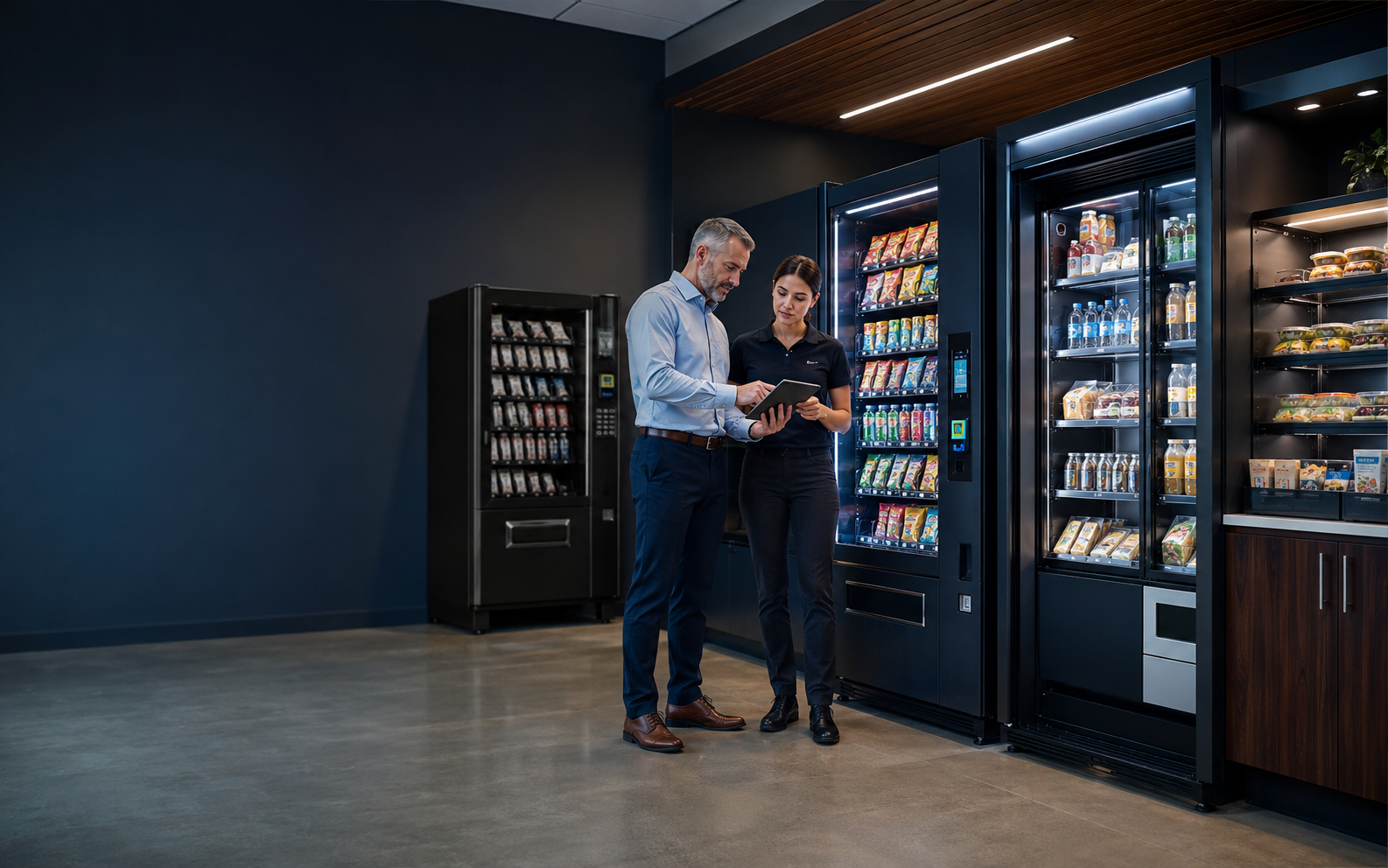
The right format for the location—not a machine forced into the space.
The correct recommendation depends on population, schedules, dwell time, product expectations, space, security, connectivity, service access, and sustainable demand.
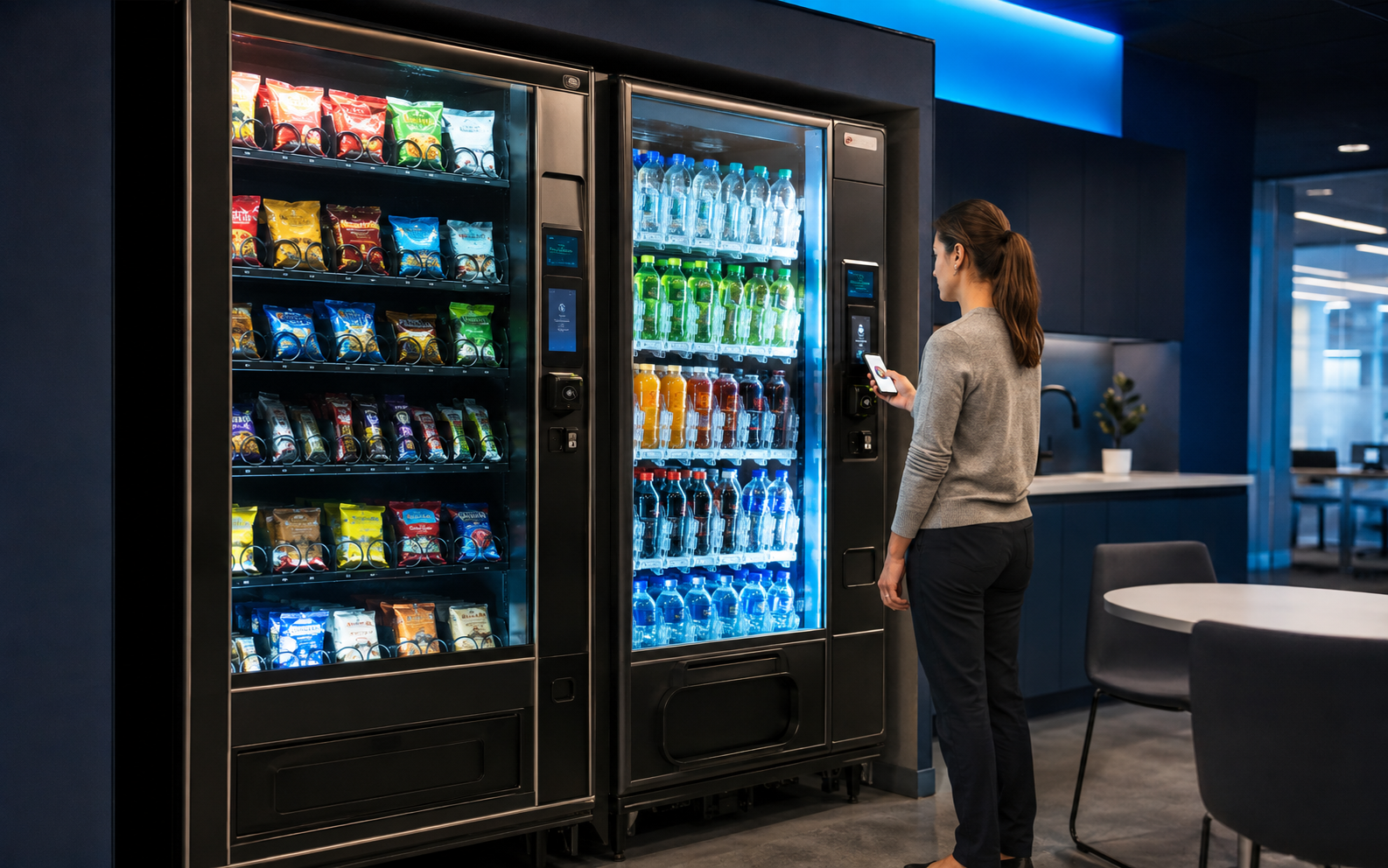
Cashless vending machines
A compact, familiar format for snacks, beverages, and combination assortments with card and supported mobile payment, intentional product selection, and professional ongoing management.
Explore modern vending →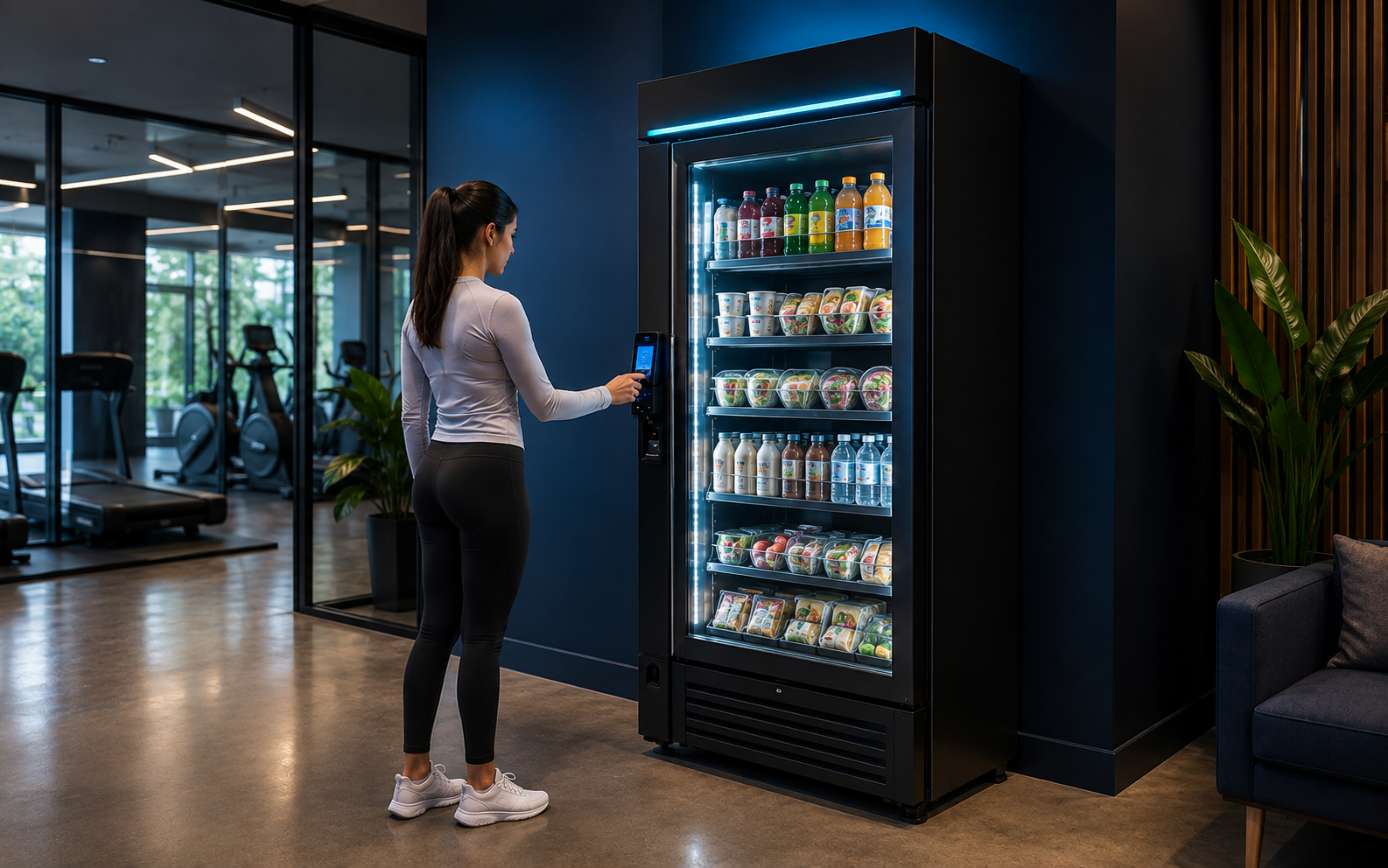
Smart coolers
Secure refrigerated access to drinks, meals, snacks, and larger grab-and-go products without requiring the footprint or open format of a full micro market.
Evaluate smart cooler fit →
Micro markets
An open self-checkout environment with expanded variety and fresh-food potential for locations with the population, space, trust, security, turnover, and service support to sustain it.
Explore micro market fit →The same retail program should not go everywhere.
Each environment has different customer moments, operating hours, product needs, access constraints, and expectations. The assortment and service model should reflect those differences.
Offices and workplaces
Support early arrivals, short breaks, missed meals, meeting-heavy days, hybrid attendance, and after-hours work without overstating what vending can solve.
Warehouses and manufacturing
Build dependable access around multiple shifts, hydration needs, substantial food options, compressed breaks, and service windows that match the operation.
Apartment communities
Create after-hours convenience around resident movement, fitness routines, late arrivals, household needs, and the service standard of the property.
Sports and training facilities
Serve athletes, parents, coaches, siblings, and guests through hydration, fuel, recovery, family-friendly products, and selected forgotten essentials.
The facility should experience simplicity because the operator owns the complexity.
Modern technology matters. But the program succeeds only when the responsibilities behind it are clearly owned.
Site and use-case assessment
Population, schedules, traffic, dwell time, nearby alternatives, placement, power, access, security, connectivity, and existing service are reviewed before a format is recommended.
Right-fit equipment
The program may require cashless vending, a smart cooler, a micro market, a hybrid approach, a smaller pilot, or no immediate installation.
Curated product strategy
Every product occupies limited retail space. Products should earn that space through relevance, repeat demand, freshness, compatibility, and commercial discipline.
Transaction confidence
Customers should understand the price, pay easily, receive the product, and know how an issue will be handled when something does not go as expected.
Availability and service management
Stocking, cleaning, physical inspection, payment performance, maintenance, freshness, and communication work together to preserve trust.
Evidence-led improvement
Transactions, stockouts, slow products, requests, seasonality, facility changes, and service history should produce better decisions over time.
Equipment should earn the right to occupy the facility.
A professional assessment is not a formality before a predetermined sale. It is the process used to determine whether a responsible program can exist.
Need
Is there a recurring problem or desire worth solving for a clearly understood population?
Moment
Is there a predictable time and place where purchasing naturally makes sense?
Access
Can customers find, reach, understand, pay for, and trust the program?
Sustainability
Can demand support the equipment, products, route, maintenance, freshness, and service standard required?
Better vending starts before the equipment is selected.
We begin with the facility and the people using it, then build the equipment, product mix, launch, and ongoing service around what the environment actually needs.
Understand the facility
We review how the space is used, when people are there, where vending fits, what already exists, and what the facility needs the program to accomplish.
Understand the people
Employees, residents, athletes, parents, visitors, students, and guests do not all want the same things. We consider who is actually using the space and what would make the experience useful to them.
Match the right format
The answer is not always the newest machine. The right solution may be improved traditional vending, cashless vending, smart coolers, a micro market, or another unattended retail format.
Build the product mix
Product selection should reflect the location rather than a generic vending list. We establish an intentional starting assortment around the people, environment, and use case.
Install and operate
Operation Vend Pro coordinates equipment, placement, stocking, presentation, payment, service, and ongoing operation so the facility is not left managing another internal burden.
Learn and adapt
Once the program is operating, real usage, requests, stocking patterns, service history, and facility changes help determine what should stay, change, or improve.
The goal is not simply to place equipment. It is to create a vending experience that fits the facility and continues to get better.
Upgrade the operating model—not only the machine.
Frequent stockouts, ignored requests, poor cleaning, failed card readers, generic products, unclear communication, and outdated equipment are signs that the system needs to be reviewed.
Operation Vend Pro evaluates the current agreement, equipment ownership, removal requirements, service problems, population, space, desired timing, and the standard the next program must meet.
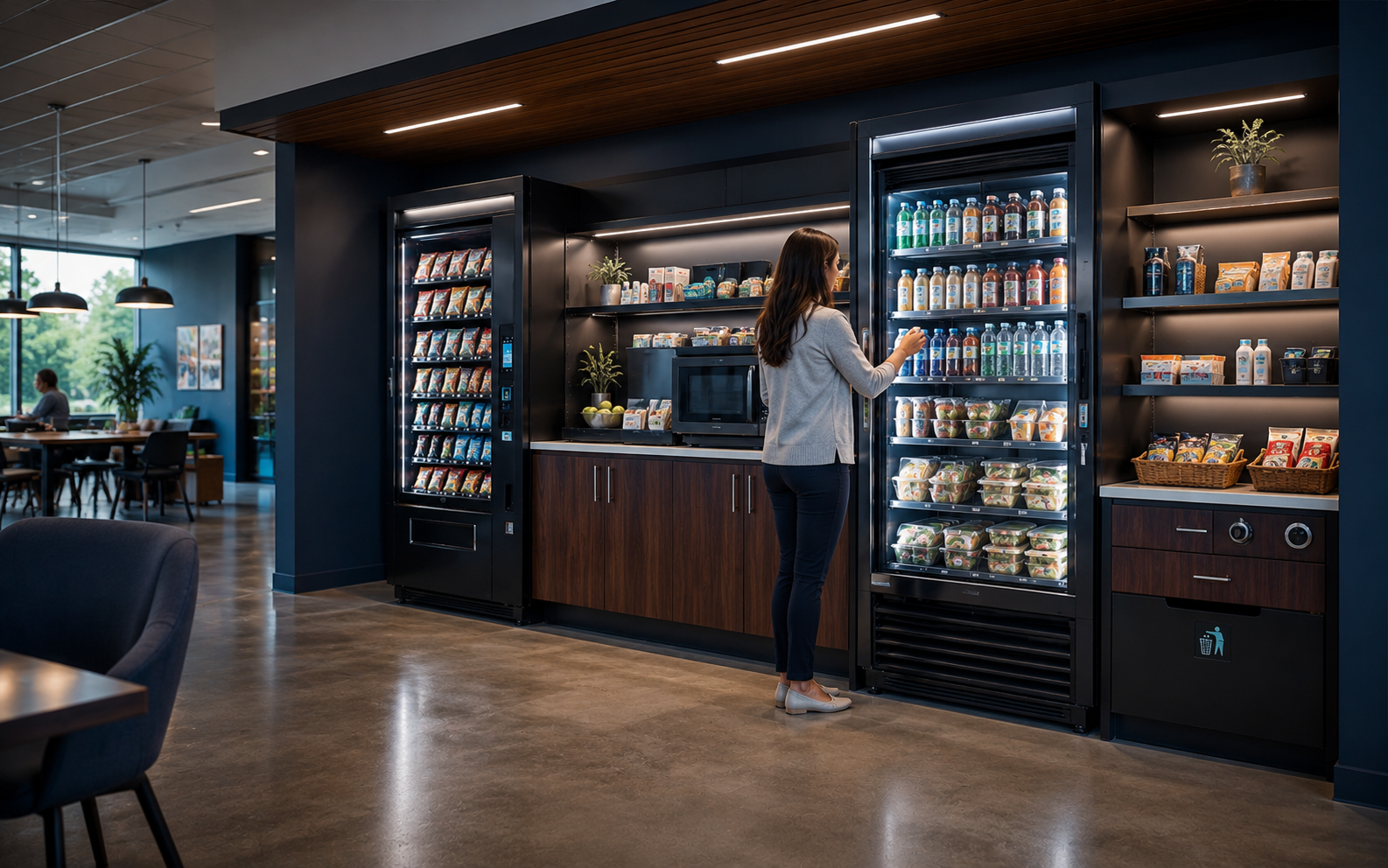
Focused service throughout Bucks and Montgomery Counties.
Local market concentration supports more disciplined routing, clearer communication, stronger facility familiarity, and a better chance of protecting the service standard after installation.
Bucks County, Pennsylvania
Modern vending, smart cooler, micro market, and upgrade evaluations for qualified workplaces, warehouses, apartment communities, sports facilities, healthcare environments, and other shared locations.
Montgomery County, Pennsylvania
Professionally managed unattended retail for qualified corporate campuses, offices, manufacturers, apartment communities, sports facilities, healthcare operations, and customer-facing environments.
Modern facility retail, explained with more honesty and depth.
The Learning Center is built for decision makers evaluating what belongs in their facility, what professional operation should look like, and how to distinguish new equipment from a genuinely better program.
What Modern Vending Should Look Like for Your Facility
The complete standard for equipment, payment, product strategy, service ownership, technology, and ongoing refinement.
Read the guide →Modern Vending Is Not a Machine Upgrade
Why the real difference between traditional and modern vending is stewardship—not a brighter screen or a newer cabinet.
Read the manifesto →When Does a Vending Machine Actually Belong?
A responsible framework for deciding when equipment deserves to occupy a facility—and when an operator should say no.
Read the editorial →Find out what your location can responsibly support.
Tell us who uses the facility, when they are present, how long they stay, what the current program gets wrong, and where convenience repeatedly breaks down.
The recommendation may be vending, a smart cooler, a micro market, a phased pilot, a different placement, or no immediate installation.
Your location appears qualified and a call or walkthrough is the responsible next move.
One or two missing details must be resolved before a format can be recommended.
The opportunity may not support the right experience yet, and we will explain why.
What facility leaders usually want to understand first.
What does Operation Vend Pro manage?
Operation Vend Pro is designed to manage the complete program, including site evaluation, equipment recommendation, installation coordination, product strategy, cashless payment, stocking, cleanliness, maintenance, issue response, facility communication, and ongoing assortment improvement.
How do you determine which format is right?
The recommendation is based on the population, schedules, dwell time, customer moments, nearby alternatives, product needs, space, power, connectivity, security, service access, refrigeration requirements, likely turnover, and sustainable economics of the location.
Does a business pay for vending installation?
The structure depends on the location, equipment, user population, operating requirements, product model, service burden, and expected demand. The site assessment determines what arrangement is realistic before commitments are discussed.
How many employees, residents, or daily users are required?
There is no responsible universal number. Consistent presence, purchasing moments, dwell time, nearby alternatives, shift patterns, placement, product demand, and the required service model matter more than total headcount alone.
Can Operation Vend Pro replace an existing provider?
Potentially. The review should include the current agreement, equipment ownership, removal obligations, service failures, payment experience, current assortment, desired timing, and what the next provider must do differently.
Can customers request products?
Yes. Requests and feedback can help shape the program, but product decisions must also account for actual demand, shelf life, machine compatibility, freshness, pricing, operating feasibility, and responsible use of limited retail space.
Do you serve all of Pennsylvania?
Operation Vend Pro currently prioritizes qualified opportunities throughout Bucks County and Montgomery County, Pennsylvania. Select surrounding Pennsylvania opportunities may be reviewed based on route fit and the needs of the location.
What makes Operation Vend Pro different?
The company treats modern vending as managed retail stewardship. The program is qualified before installation, designed around the environment, operated as a complete system, and improved through evidence rather than left static after launch.
Do not begin with the machine you want.
Begin with the people, the environment, the recurring moment, and the standard of care the program must uphold.